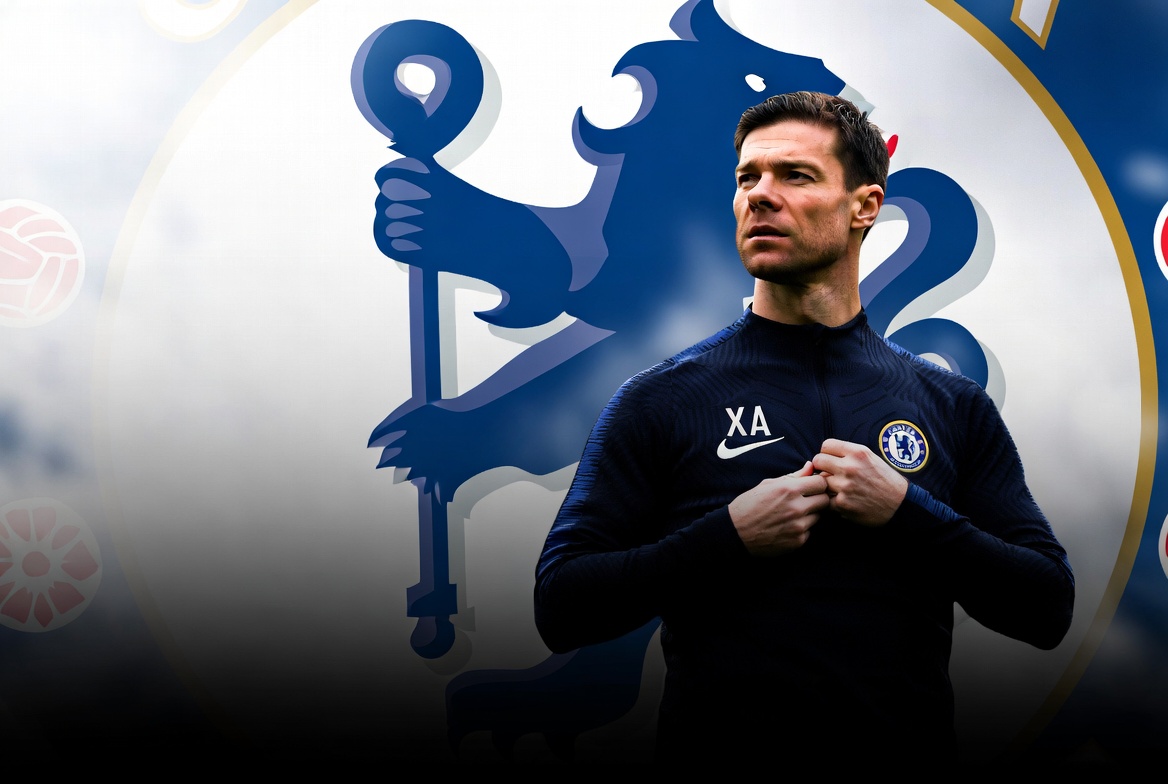
The swivel chair at Stamford Bridge has become the most precarious seat in global football. Since the transition to the BlueCo era, Chelsea Football Club has functioned less like a traditional sporting institution and more like a high-stakes social experiment in "disruptive" squad building. Yet, as the dust settles on a period of tactical volatility, one name rises above the noise as the definitive solution: Xabi Alonso.
While the rumor mill churns with respected names—tacticians of high standing and veteran stabilizers—Alonso represents more than just a coaching hire. He represents a philosophical alignment that Chelsea has lacked since the peak of the Roman Abramovich era. Selecting Alonso isn't a slight to other candidates; it is an admission that Chelsea needs a world-class architect who speaks the language of modern dominance.
The Tactical Symbiosis: High-IQ Football for a High-Potential Squad
Chelsea’s current roster is a paradoxical collection of immense technical talent and tactical disorientation. In Alonso, the Blues would be hiring a manager whose primary currency is control.
At Bayer Leverkusen, Alonso didn’t just win; he dismantled the Bundesliga’s hierarchy through a sophisticated blend of positional play and defensive structural integrity. His preferred system—a fluid 3-4-2-1 that transitions into a suffocating 3-2-5 in possession—is the perfect "software" for the "hardware" currently sitting in the Chelsea dressing room.
Midfield Mastery: For a club that has invested record sums in Enzo Fernández and Moisés Caicedo, Alonso is the ultimate mentor. As one of the greatest deep-lying playmakers in history, his ability to coach the nuances of tempo and spatial awareness would finally unlock the potential of Chelsea’s billion-pound engine room.
Structured Freedom: Alonso’s system provides the rigid defensive floor that young teams need to feel secure, while offering the creative ceiling that allows players like Cole Palmer to thrive in the half-spaces.
The "Nothing to Lose" Paradox
The most compelling argument for Alonso taking the Chelsea job right now is the unique lack of risk involved. Historically, Chelsea was seen as a "career killer" for managers. Today, the narrative has shifted so far toward institutional chaos that the expectations have actually recalibrated in a manager's favor.
If Alonso arrives at Stamford Bridge, he enters a "low-floor, infinite-ceiling" scenario.
Low Expectations: Given the turbulence of the last two seasons, simply finishing in the Top 4 and establishing a clear style of play would be hailed as a monumental success.
Resource Abundance: He would be handed a squad of elite young athletes and a recruitment machine that, while frantic, is undeniably committed to spending.
For Alonso, Chelsea is a playground of potential. If he fails to tame the beast, the football world will blame the "Chelsea Chaos" rather than his coaching acumen—much as they have for his predecessors. But if he succeeds? He becomes the man who fixed the unfixable.
The Stepping Stone Strategy: Liverpool and Munich
There is an elephant in the room: Alonso’s deep emotional ties to Liverpool and Bayern Munich. Skeptics argue that Chelsea is a "distraction" from his eventual destiny at Anfield or the Allianz Arena. However, a cold, analytical look at the career trajectory of elite managers suggests the exact opposite.
Working for Chelsea will not stand in the way of his ambitions; it will accelerate them.
The modern managerial elite—the Guardiolas, Mourinhos, and Ancelottis—are defined by their ability to win in different environments. If Alonso’s ultimate goal is to lead Liverpool or Bayern, he must prove he can handle the "pressure cooker" of a Premier League giant that isn't already a well-oiled machine.
The Proof of Concept: If Alonso can navigate the complex political and sporting landscape of Chelsea and deliver silverware, he proves to the hierarchies in Munich and Merseyside that he is not just a "one-club wonder" from Leverkusen, but a manager capable of transforming any heavyweight.
The Tactical Evolution: Success in the Premier League’s physical and tactical gauntlet is the ultimate badge of honor. A successful stint in London only makes him a more refined, battle-hardened candidate for those "dream" roles down the road.
A Marriage of Necessity and Ambition
Chelsea finds itself at a crossroads where they can no longer afford "project" managers who are learning on the job, nor can they afford "firemen" who only offer short-term fixes. They need a visionary who commands instant respect in the dressing room.
Alonso brings the "aura" of a multi-time Champions League winner combined with the fresh, innovative tactical mind of the new school. He is the bridge between Chelsea’s glorious past of winning at all costs and a future defined by a clear, attractive identity.
Conclusion
To choose Xabi Alonso is to choose a path of calculated ambition. It is a move that respects the caliber of other candidates while acknowledging that Alonso possesses a specific set of tools—tactical sophistication, elite-level pedigree, and a calm temperament—that fits the Chelsea puzzle perfectly.
For the club, it is a chance to finally install a world-class pilot for their expensive jet. For Alonso, it is a chance to test his mettle in the world’s most watched league with a squad that is a "tactical reset" away from greatness. Whether his journey eventually leads back to the North of England or the heart of Bavaria, the road through Stamford Bridge is not a detour—it is the ultimate proving ground.